
Your Kid Already Tried to Tell You. You Just Didn't Hear It.
Your Kid Already Tried to Tell You. You Just Didn't Hear It.
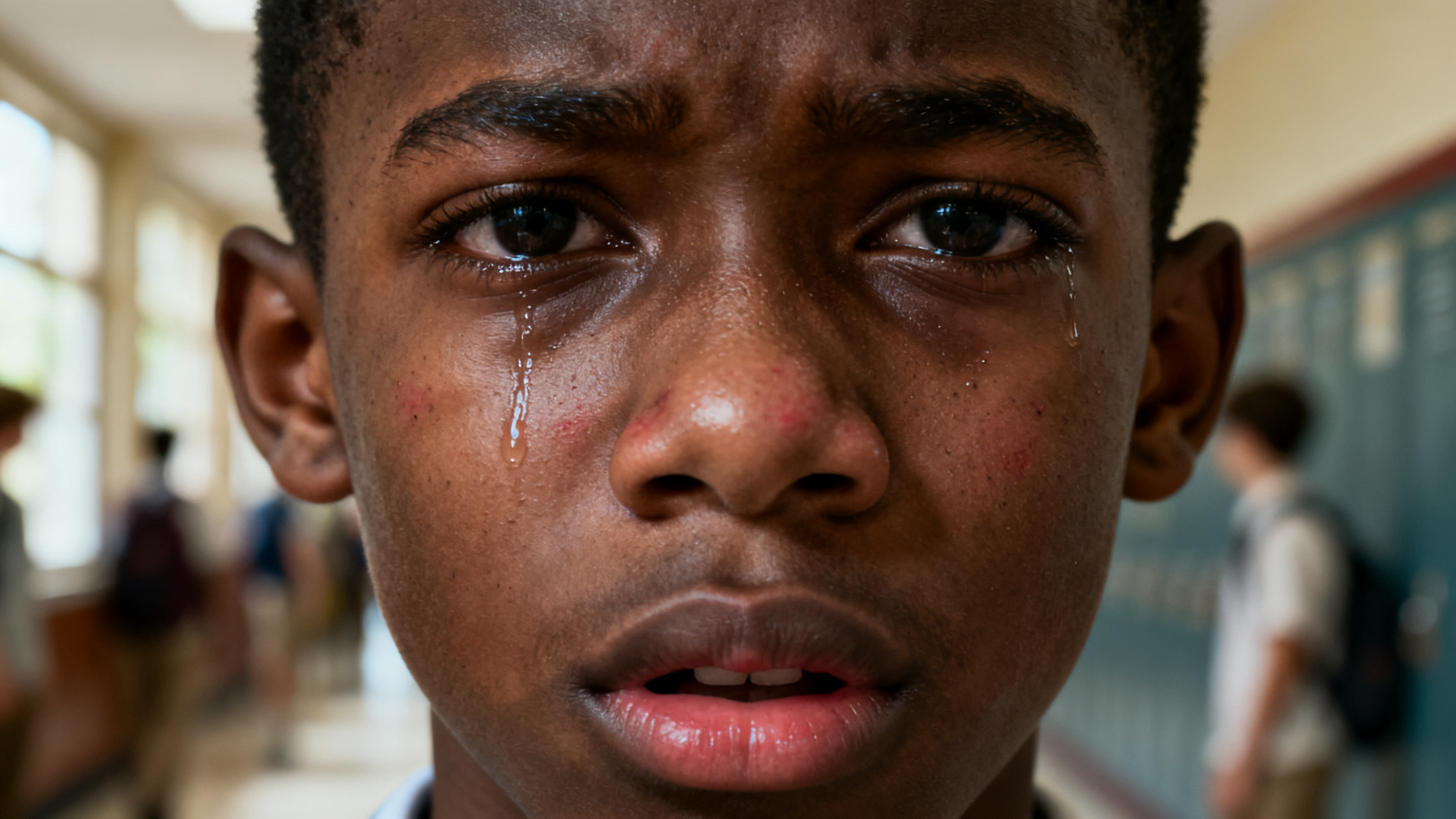
There's a particular kind of quiet a kid gets when something happened at school and they don't know how to say it.
You know the one. They walk in the door and the backpack hits the floor a little harder than usual. They go straight to their room, or they fold into the couch, or they say "I'm fine" before you've even asked. Their eyes are doing something different than their mouth.
If you're a parent, you've felt that moment. And right behind it, you've probably also felt that other thing. The flash of heat. The protective instinct that wants to grab keys, drive to the school, and figure out who did this to your kid. Because nothing on this earth breaks a parent down faster than watching their child sit with a hurt they can't name yet.
Here's what I want to say plainly. When your kid comes to you with something that feels small to you, it isn't small to them. And the way you respond in that first conversation will decide whether they ever bring you the next one.
The thing we keep saying that we need to stop saying
"Kids will be kids."
"Boys will be boys. Girls will be girls."
"Back in my day we just dealt with it."
I get where it comes from. A lot of us grew up being told to toughen up, and we turned out okay, so we pass it down like a family recipe. But here's the problem. When you wave off what your child is telling you, even with good intentions, you're teaching them something you don't mean to teach them. You're teaching them that you're not the person to come to next time. You're teaching them that their read on the world is wrong. You're teaching them to stop trusting the signal in their own chest that says something is off here.
That's not toughness. That's a kid learning to swallow it.
What do the numbers actually say?
About one in five students between 12 and 18 reports being bullied at school (1). And verbal bullying makes up roughly 73 percent of cases (2), which means a lot of what's happening to your kid doesn't leave a mark you can see.
The harder number is this one. Only about 24 percent of kids who experience bullying ever tell a parent. Only 14 percent tell a teacher. And 28 percent won't tell anyone at all (3).
So when your child does come to you, even sideways, even with a small comment about something that "happened at lunch," that's not a complaint. That's a door cracking open.
Why don't they tell us?
This part matters because if you understand why kids stay quiet, you stop taking the silence personally.
Kids stay quiet because they feel embarrassed and ashamed. They worry their parents will be disappointed, or angry, or that we'll overreact and make it worse (4). Some of them think it's their own fault. Some are afraid the bully will come for them harder if word gets out. Some have already decided that adults can't actually do anything about it. One study found that only about 14 percent of children believe adult intervention would actually stop the bullying (5).
Read that again. Most kids think coming to us won't help.
Our job is to prove them wrong. Quietly, patiently, and over time.
About the teachers
I want to be careful here; I'm not trying to blame teachers. Most teachers I know are working harder than their paychecks reflect, with classrooms that are too full and resources that are too thin.
But I'll tell you what I keep hearing, and it isn't isolated. Kids are being picked on right in front of adults who choose not to see it. Comments made loud enough to hear, with nobody stepping in. The data backs up what families are saying. Almost half of bullied students reported it happened just a few steps away from a teacher (6).
I teach Sunday school. When I hear one of my kids laugh at another kid for stumbling over a word, I stop the lesson right there. We talk about it. The kid who did the teasing apologizes, and we have a real conversation about why we don't treat people that way. It takes five minutes. It changes the room.
I'm not saying every teacher has to be a counselor. I'm saying when a kid is hurting in your classroom, you don't get to look the other way and call it neutrality.
So here's what we can do as parents. Not to attack the school, not to start a war. To actually show up for our kids.
Ten things to do when you suspect your child is being bullied
Believe them the first time, even if the story sounds small. Even if you think they're being sensitive. Your first reaction is the one they'll remember. Lead with "tell me more," not "are you sure?"
Watch for what they don't say. Trouble sleeping, frequent stomachaches or headaches, changes in eating, lost or damaged belongings, sudden loss of friends, not wanting to go to school, declining grades (7). None of these alone means bullying. Together, they mean pay attention.
Ask specific questions, not general ones. "How was school?" gets you "fine." Try "Who did you sit with at lunch today?" or "Was there anyone on the bus who was annoying?" Specific questions give kids a foothold to talk.
Stay calm in the first conversation. This is the hardest one. Your kid is watching to see if telling you was a mistake. If you explode, even at the bully and not at them, they'll register it as "telling my parents makes things worse." Save the reaction for the parking lot.
Don't tell them to fight back. I know. Every part of you wants to say it. But that advice can lead to more violence and someone getting hurt (8), including your kid. There are better moves.
Document what's happening. Dates. Names. What was said or done? Who saw it? If you end up in a meeting with the school, you don't want to be running on memory and emotion. You want a record.
Go to the school, but go prepared. Email the teacher first, then the principal if needed. Keep it factual. Ask specifically what the school will do, and request a follow-up timeline. If the answer is vague, ask again. Polite, persistent, and on paper.
Teach the inside game, not just the outside game. Yes, stop the bullying. But also work on what's happening inside your kid. The voice in their head is starting to wonder if maybe the bullies are right about them. That voice is the real damage, and it's the one you can actually do something about at home. Tell them what you see in them. Specifically. Often.
Get them around people who treat them well. One good friend is a fortress. A team, a youth group, a cousin, a Sunday school class, a sport, anything where they walk in, and someone is glad to see them. Bullying shrinks a kid's world. Your job is to keep their world wide.
Don't disappear after you talk about it once. Check back in three days. A week. Two weeks. Not interrogating, just present. "Hey, how's that thing with [name] going?" Kids need to know that telling you wasn't a one-time event. It was the start of you being in it with them.
The deeper work
Here's the part I can't leave out, because it's the whole reason I do what I do.
Bullying is real and it's external. You can't always stop it, and you can't always be in the room. But you can build a child who is so solid inside themselves that the bullies stop being able to reach them. Not because the bullying stops, but because your kid stops believing what the bullies are saying.
That work doesn't start with your kid. It starts with you. The way you talk to yourself in front of them. The way you handle your own bad days. The way you show them what it looks like to believe in yourself even when the world is loud and unkind. They are watching all of it.
If you can show them, they can do it.
If I can, you can. Believe that.
References
(1) PACER's National Bullying Prevention Center. Bullying Statistics. Citing National Center for Education Statistics, 2022. https://www.pacer.org/bullying/info/stats/
(2) Defeat the Label. Why Traditional Anti Bullying Tactics Failed in 2025. https://defeatthelabel.com/why-traditional-anti-bullying-tactics-failed-in-2025/
(3) Look Through Their Eyes. What Parents Should Know About Bullying. https://lookthroughtheireyes.org/what-parents-should-know-about-bullying/
(4) Nemours KidsHealth. Helping Kids Deal With Bullies. https://kidshealth.org/en/parents/bullies.html
(5) SteadyHealth. Why Kids Don't Tell Their Parents They Are Being Bullied, And How To Spot The Signs. https://www.steadyhealth.com/articles/why-kids-dont-tell-their-parents-they-are-being-bullied-and-how-to-spot-the-signs
(6) WriteMyEssay. Essential Bullying Statistics in the US: 2025 Edition. https://www.writemyessay.com/blog/school-bullying-statistics
(7) Nationwide Children's Hospital. Bullies: Helping Your Child Cope. https://www.nationwidechildrens.org/family-resources-education/family-resources-library/bullies-helping-your-child-cope
(8) Phoenix Children's Hospital. For Parents: Signs That Your Child Is Being Bullied. https://phoenixchildrens.org/specialties-conditions/parents-signs-your-child-being-bullied
