
The Words You Say About Yourself Are Raising Your Kids Too
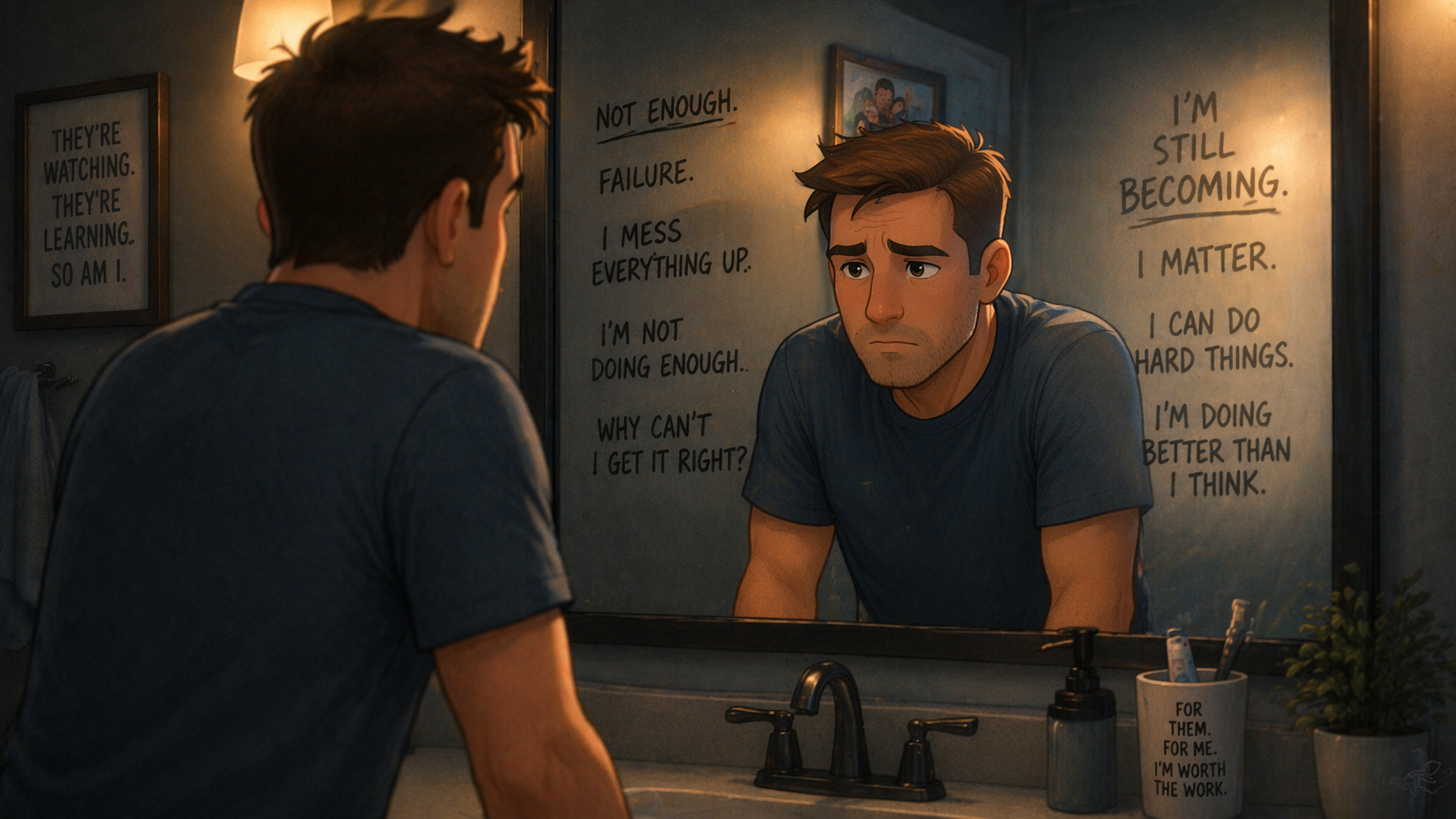
The Words You Say About Yourself Are Raising Your Kids Too
There's something most of us never stop to think about.
We are careful, almost painfully careful, about how we speak to other people. We measure our tone. We pick our words. We soften the edges. We don't want to offend, we don't want to hurt feelings, we don't want to come across the wrong way.
And then we turn around and absolutely tear ourselves apart.
"I'm so stupid." "I can't do anything right." "I'm lazy." "Why am I like this?" "What is wrong with me?"
We say it out loud. We say it in our heads. We say it in front of our kids. And we've been doing it for so long that we don't even hear it anymore.
I'm a Use Case of This. A Real One.
I'm not writing this from some clean, polished place where I figured it all out and now, I'm here to tell you how it's done. I'm writing this because I lived it for years.
The complaining. The arguing. The blaming. The way I talked about situations, about other people, and most of all, about myself. I put so much negative input into my own mind that the output was exactly what you'd expect. I felt bad about myself. I felt stuck. I felt angry. I questioned why nothing was working, why I felt the way I did, and why I couldn't seem to break through.
But the truth is, I had been speaking it into my own mind for years. And my mind was doing what minds do. It was giving back what I gave it.
We Think Being an Adult Means We've Got It Figured Out
Here's the lie a lot of us live inside of.
We think that because we're grown-ups, with responsibilities, able to pay bills, hold down jobs, and raise kids, we've somehow got our internal world under control, too. We think we can diagnose ourselves. Analyze ourselves. Make sense of it all. We're smart. We're adults. Of course we understand what's going on inside us.
Wrong.
Many of us have believed a false narrative about ourselves for years, but beneath that is the true person we were before the world and self-doubt shaped us.
Words Matter. Especially the Ones You Say About You.
There's an old idea that keeps coming back around because it's true. Words can build up, or words can destroy.
We apply this carefully when we talk to our kids. We know not to call them stupid. We know not to say they're a disappointment. We know the damage that does because we can see it on their faces.
But somehow, when it's us, when we're alone with our own thoughts, when we're looking in the mirror, when we're lying in bed at night replaying the day, all those rules go out the window. We will say things to ourselves that we would never, ever say to our child.
And here's the part a lot of parents miss. Your kids are listening to how you talk about you. They hear you call yourself stupid when you forget something. They hear you say you're a mess. They hear you tear yourself down over a mistake. And they're learning something in those moments. They're learning how an adult, the adult they love most, speaks to themselves. They're building their own inner voice on top of the one they hear from you.
The Good News Is, This Can Be Reversed
I want to be clear about something, because this part matters.
You cannot change what you've already put in. I can't. You can't. None of us can rewrite the years we spent dwelling on the negative, complaining, speaking things over ourselves that we shouldn't have.
But you can reverse the direction. Starting today.
I'm a use case of that too. I spent years going one way, and then I started going the other way. Slowly at first. One thought at a time. One word at a time. Catching myself. Rewording. Speaking something better over myself, even when I didn't fully believe it yet. And over time, the output started to change, because the input started to change.
A Few Questions Worth Sitting With
If you want to start, here are a few honest questions. Not from a checklist. Just things worth asking yourself this week.
What do I say about myself when something goes wrong?
What do my kids hear me say about me?
If my child spoke to themselves the way I speak to myself, would it break my heart?
What would I like my inner voice to sound like a year from now?
You First. Then Your Kids.
Here's the thing I keep coming back to. You cannot teach your kids to speak kindly to themselves if you're tearing yourself apart in front of them. You cannot hand them a tool you don't own.
The work starts with you. It has to.
And that's actually the most hopeful part of this whole thing. Because when you start speaking differently over yourself, you're not just changing your own life. You're handing your kids a completely different inner voice than the one most of us grew up with.
That's worth the work.
If I can, you can. Believe that.
